
What we’re thinking
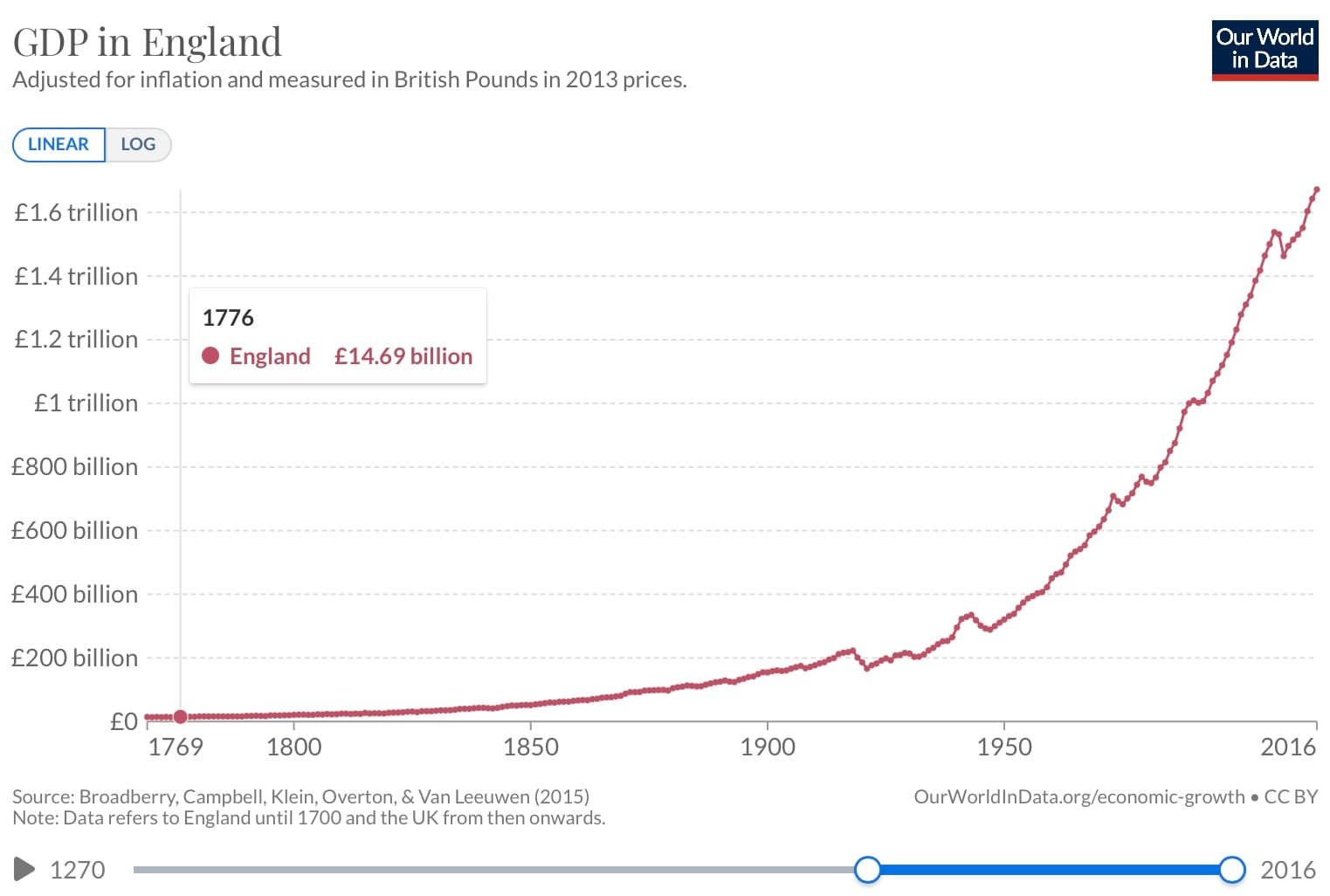
The growth achieved over the last few centuries has been extraordinary. From the time Adam Smith published The Wealth of Nations in 1776, England’s GDP grew from approximately £14.7 billion to more than £1.6 trillion in real terms. Similar patterns can be seen across much of the developed world.
To understand and sustain this growth, economists and managers focused primarily on manufacturing and exchange. Their dominant mental model became value-in-exchange: organisations create value by transforming resources into products, embedding value within them, and exchanging those products in markets.
This perspective proved remarkably powerful. It helped managers improve productivity, scale production, optimise supply chains, reduce costs, and develop new products. As firms became better at creating and exchanging value, economies grew.
There should be little doubt about its success. Value-in-exchange has been one of the most influential and productive ideas in economic history.
Why this matters
The question is not whether value-in-exchange worked. Clearly, it did.
The more important question is whether it remains the most useful unit of strategy for a world that looks very different from the one in which it emerged.
Smith developed his ideas in an economy dominated by agriculture, manufacturing, and trade in physical goods. Today’s economy is increasingly shaped by services, software, ecosystems, platforms, knowledge, and ongoing relationships. Many of the most important outcomes are no longer embedded in products but emerge through use, interaction, and collaboration.
If value-in-exchange helped explain and drive growth in the industrial era, is it still sufficient for understanding growth in a service-oriented economy?
Looking at growth over recent decades paints a worrying story.
Let’s progress together through discussion…