
You’re not alone in thinking innovation investments are not moving the needle much. We have an innovation problem that’s impacting your organisation’s, and macroeconomic, growth…and it’s because we chase value.
Beyond Value Podcast Episode:
What we’re thinking
McKinsey tell us only 6% of executives are happy with their innovation initiatives – think about that for a moment, 94% of executives are not happy! Yet 84%, according to the same research, see innovation as important to growth. More recent research tells the same story. And worryingly, the IMF cautions us that we are heading into the “tepid 20s” in terms of growth.
Why this matters
The innovation problem is not an output issue, it’s structural:
- innovation is decreasingly translating into growth
- organisational lifespan is shrinking – incumbents face higher obsolescence risk
- workforce belief in their organisation’s innovativeness is weakening
- we are increasingly performing innovation theatre
We’re navigating innovation using outdated maps; entrapped by an obsession to add value – a concept that is difficult to define, agree upon, and measure.
innovation is Failing us
You are not neglecting innovation. If anything, you are investing in it more deliberately and visibly than ever before.
You have funded accelerators and digital labs, piloted generative AI initiatives, expanded venture activity, implemented ideation platforms, and embedded innovation language into strategy reviews and investor narratives. Innovation appears in board conversations and quarterly updates as a declared engine of growth and resilience.
And yet, despite that visible commitment, you sense a widening gap between ambition and outcome.
Your perception is not anecdotal or made in isolation.
You’re in good company
90% executives state innovation critical to growth; only 6% happy with their innovation performance
McKinsey (2008)
McKinsey & Company’s oft quoted research from 2008 found that nearly 90% of executives consider innovation critical to growth, yet only 6% of the same executives report satisfaction with their innovation performance.
They further uncovered that “very few [executives] know what the problem is, or how to fix it”.
Belief in innovation’s centrality has strengthened. Confidence in its execution has not.
83% of senior leaders rank innovation among their top priorities. Yet only 3 % of organisations qualify as “innovation ready,”
BCG (2024)
More recent analysis reinforces the pattern. In its 2024 global study, Boston Consulting Group reported that 83% of senior leaders rank innovation among their top three priorities…
…yet only 3% of organisations qualify as “innovation ready” – meaning they can reliably translate ambition into sustained results (“Innovation systems need a reboot“).
Worse still, that innovation readiness has declined sharply since 2022, even as rhetoric has intensified.
We find similar signals in other research.
96% executives expect innovation to drive growth; only 21% met their innovation goals
NTT (2023)
The 2023 Innovation Index from NTT DATA (“NTT DATA’s 2023 Innovation Index“) reports that 96% of executives expect innovation to drive growth…
…only 21% of those executives say they have definitively met their innovation goals.
Worryingly, more than half of those executives describe their innovation performance as average or worse; nearly two-thirds reported similar underperformance in speed to market.
The gap is systemic. What’s going on inside organisations?
The internal perspective
Inside organisations, the innovation problem signal is equally visible.
…just 16.6% of employees believe their organisation is innovative
Gartner (2025)
Research from Gartner shows declining employee belief that their organisation is innovative. Just 16.6% of employees held that belief in 2Q25.
That figure is down from 23.3% in 3Q22!
NTT Data’s industry survey found that the top-down perspective is no better. 78% of executives cited poor organisational culture is holding back their innovation efforts; 58% describe their organisation’s readiness to foster innovation as “weak” or “mixed.”
…only 13% of organisations report significant enterprise-level impact of Gen-AI solutions
TechRadar (2025)
Even the current AI wave – often framed as the great corporate reset – reveals a pattern of widespread experimentation, but scaling is rare. BCG’s report informs us that “although 86% of organizations are experimenting with GenAI for innovation, only 8% are applying GenAI at scale”. Whereas TechRadar highlights that “only around 36% of organisations have successfully scaled generative AI solutions, and only 13% report significant enterprise-level impact”.
“We’re observing a troubling picture of zombie organisations just going through the motions of innovation…” (paraphrased)
BCG (2024)
The constraint is organisational capability to integrate, scale, and govern innovation as a systemic discipline — aligned to delivering what customers truly want, rather than launching a series of isolated initiatives. BCG, again, tell us that we’re observing zombie organisations just going through the motions of innovation.
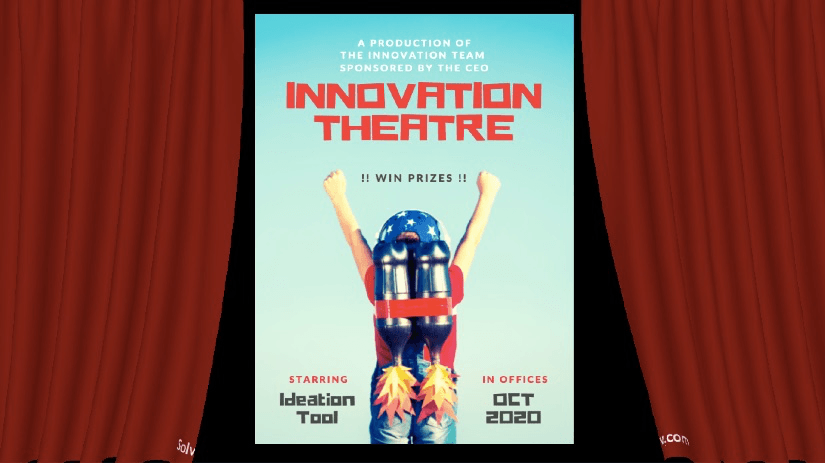
The potential result is what Steve Blank memorably called innovation theatre: initiatives that look impressive but fail to move the performance needle.
The macro implications
The innovation problem extends beyond individual firms.
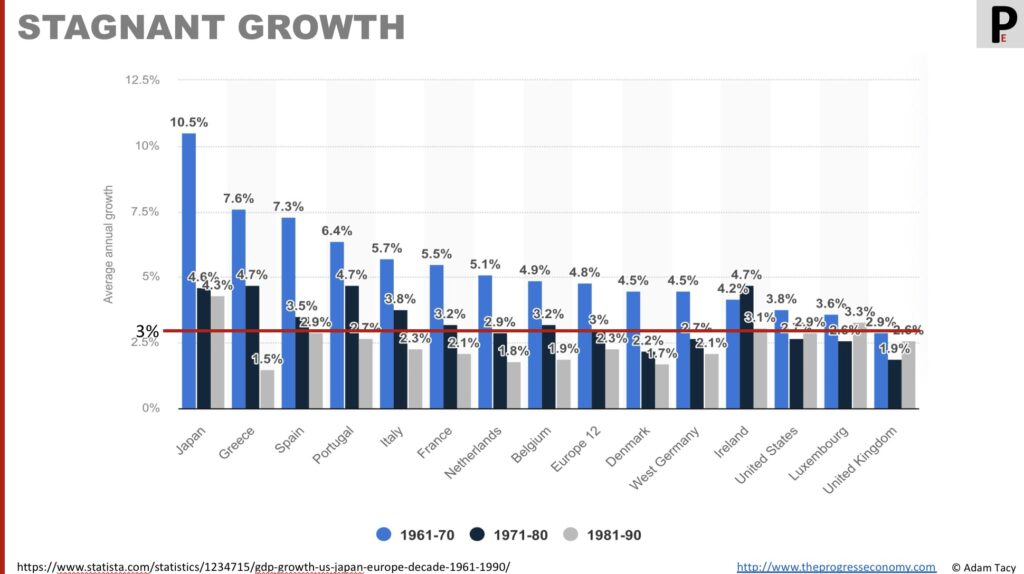
Despite sustained increases in R&D spending across advanced economies, growth has remained subdued, according to the Organisation for Economic Co-operation and Development (“OECD“, and “OECD“).
…we are facing the “tepid 20’s” – a period of stagnant growth
IMF
In 2024, the chair of the International Monetary Fund went as far as warning that we are heading for a prolonged period of stagnant growth – the so-called “Tepid 20s”.
The importance of innovation to growth is well understood by executives. A study by PWC (2019) found that “64% of executives saw innovation and operational effectiveness as equally important to the success of [their] company”.
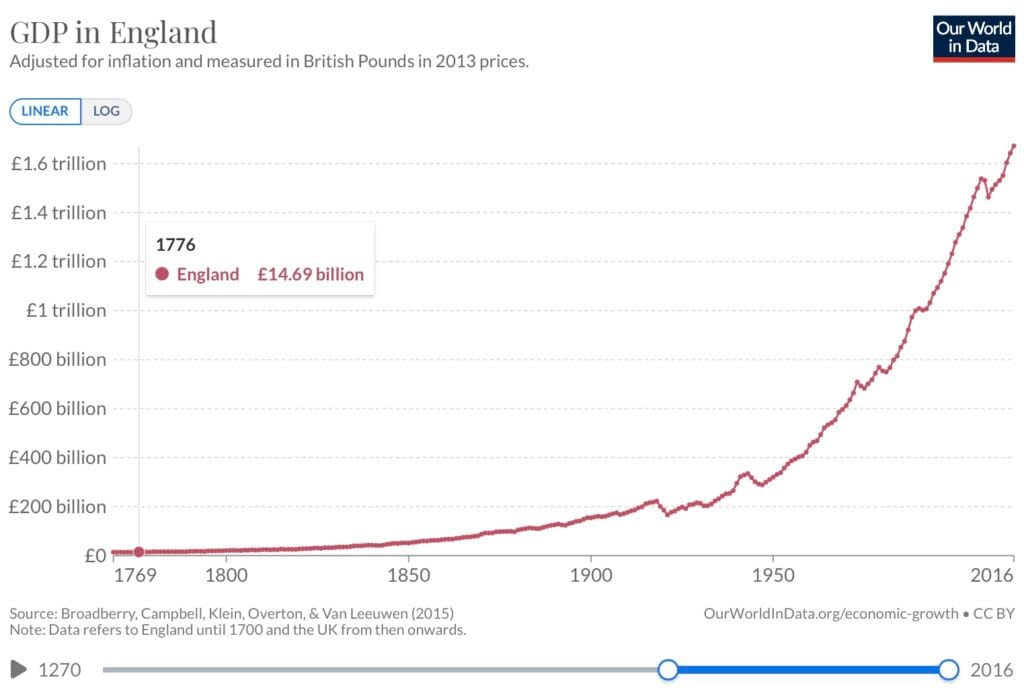
2025’s “Nobel prize” in economics was awarded “for research explaining innovation-driven economic growth”. This recognition reinforces a lineage of thought stretching from Schumpeter’s theory of creative destruction to endogenous growth theory, most prominently advanced by Paul Romer and Christensen’s notion of disruptive innovation (The Innovator’s Dilemma). These frameworks show that sustained growth emerges when new ideas expand productive capacity and reshape economic trajectories.
We have seen this lead to previous explosive growth. Growth that is now missing in our economy.
Organisations innovate to sustain advantage, adapt to change, capture technological opportunity, and maintain long-term viability.
However, data from Innosight shows that Corporate lifespans continue to contract, with incumbents replaced at accelerating rates. If you don’t innovate, someone else will – the visible manifestation of Drucker’s “innovate or die”.
This should worry executives. The 2025 Global CEO Survey from PwC, revealed that 40% of CEOs state that their companies may not remain economically viable within a decade if they continue on their current path.
Belief in the need for innovation has never been stronger. Outcomes remain stubbornly weak.
The innovation problem
We prioritise innovation; we fund it; we announce it; and we measure it. Yet we struggle to generate durable growth and long-term viability.
Taken together, the evidence reveals a consistent pattern. We prioritise innovation, fund it, announce it, and measure it. Yet we struggle to generate the kind of sustained, systemic impact that ultimately matters: durable growth and long-term viability.
This is the innovation problem.
It is not a creativity, funding, or even technology, problem. It is a problem of framing and execution.
We have built our economic worldview around value and its exchange. Our innovation practices naturally evolve around a relentless pursuit of adding more value. These ideas have served us remarkably well. They helped shape modern industries and powered decades of growth.
But value is a concept that proves difficult to define, align on, and measure meaningfully. And the model of value-in-exchange carries significant blind spots – before, after, and across the point of exchange – that are becoming increasingly consequential in today’s economies.
Our innovation approach relies on an incomplete map, guiding us toward a destination we struggle to define, agree upon, and measure.
Let’s progress together through discussion…