
What we’re thinking
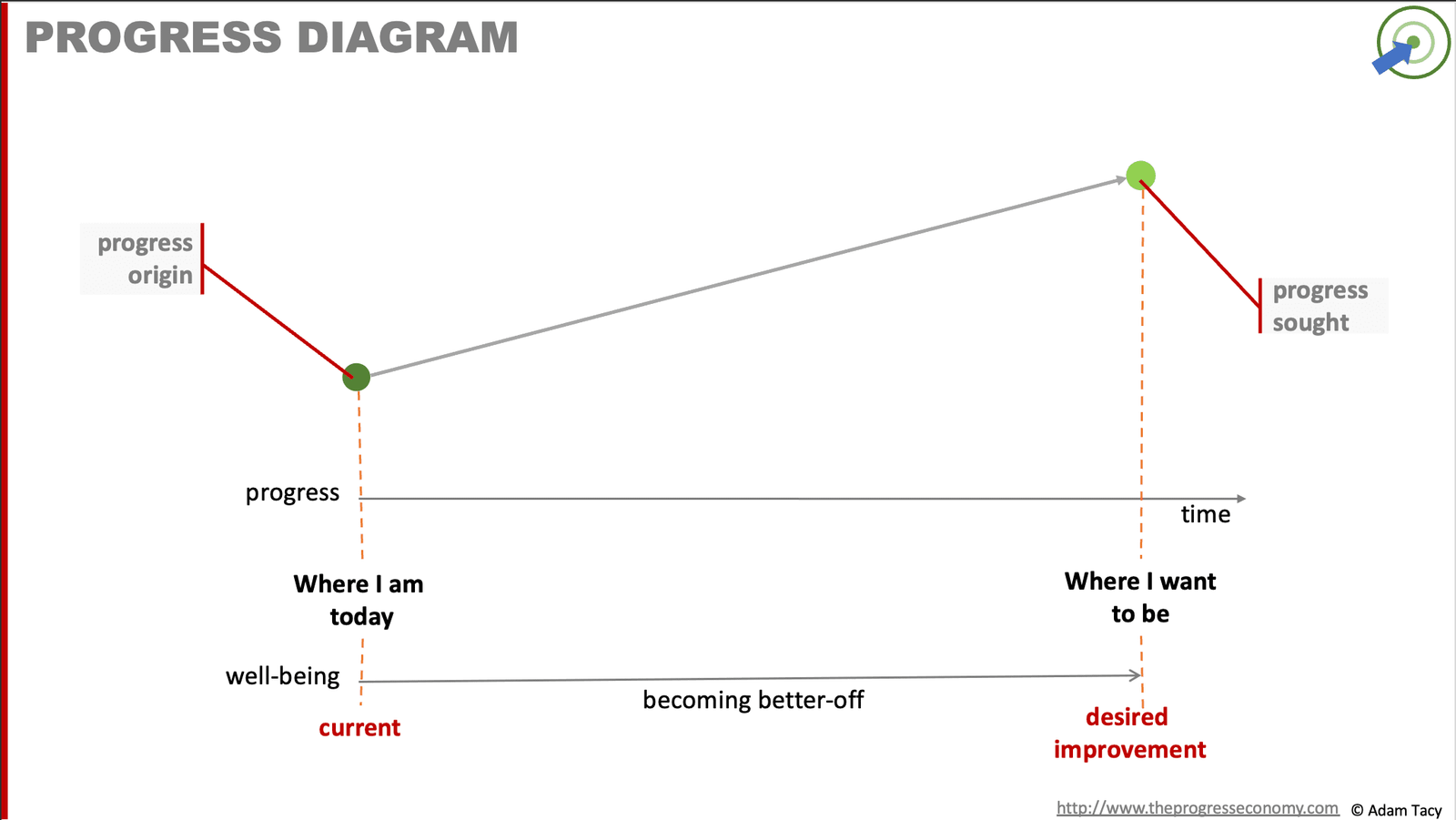
The Progress Diagram provides a visual language for The Progress Economy. It acts as the stage upon which its key concepts can be represented, explored, and connected.
Why this matters
Using a common visual framework, we can describe progress itself, progress attempts, propositions, innovation, sales, value emergence, value recognition, and many other concepts. What might otherwise appear as separate ideas become different views of the same underlying phenomenon: actors attempting to move from a current state towards a more desired one.
Introducing the progress diagram
The Progress Diagram is the stage on which we can visually explore and explain the key concepts of the Progress Economy, and elicit the progress levers that underpin both innovation and sales.
Navigating the diagram
In its simplest form, the diagram represents progress as movement over time from a Seeker’s progress origin towards their progress sought. The first horizontal axis represents progress over time.
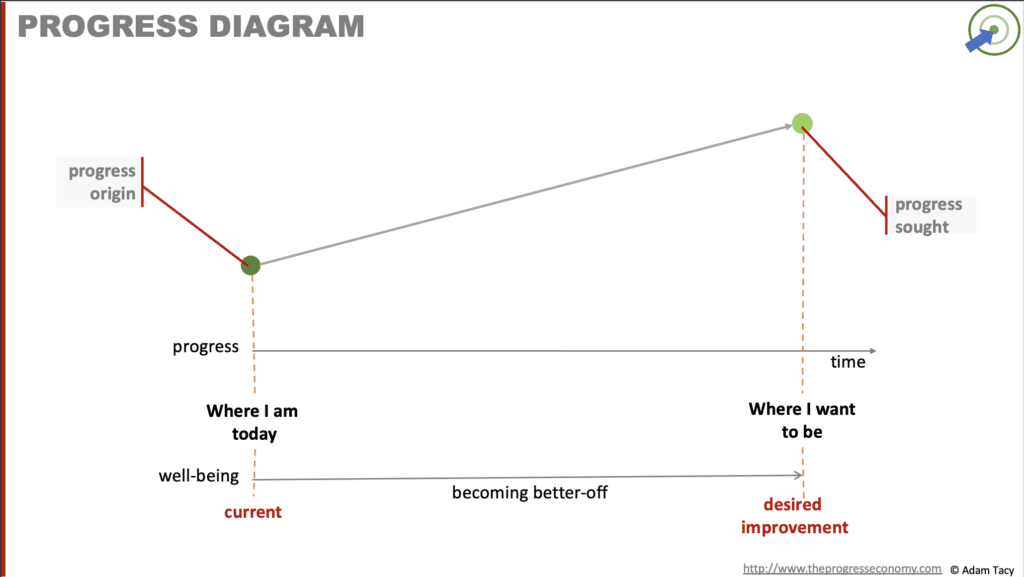
The second horizontal axis represents well-being, which we notionally believes increases as progress is made, There is an absolute relationship between a Seeker’s origin and their current well-being; as well as their progress sought and their desired improvement in well-being.
Their is no formal description of the y-axis, but we notionally show progress sought as higher than progress origin to visually indicate an increase in well-being, ie the Seeker becomes better-off.
Exploring basic concepts
Ww will build on this diagram through the progress economy. It provides a powerful way to explain and explore the concepts such as progress journeys, and how value emerged and needs o be recognised
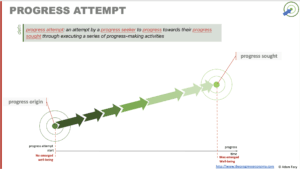
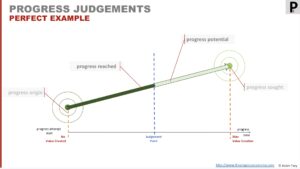
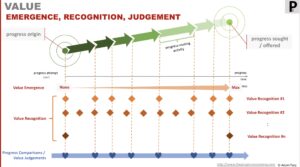
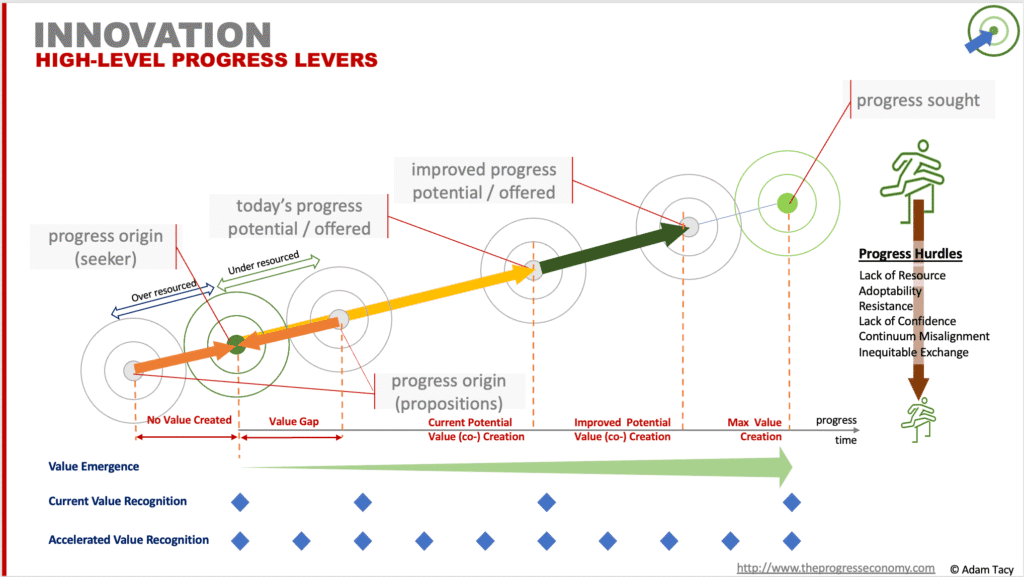
It allows us to understand progress propositions and that in most cases the progress offered by a proposition does not align with the progress sought by the Seeker. Nor does the proposition’s progress origin necessarily match the Seeker’s own starting point.
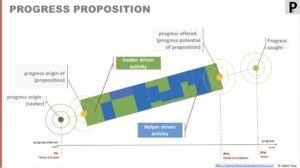
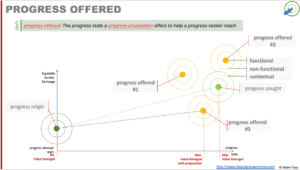
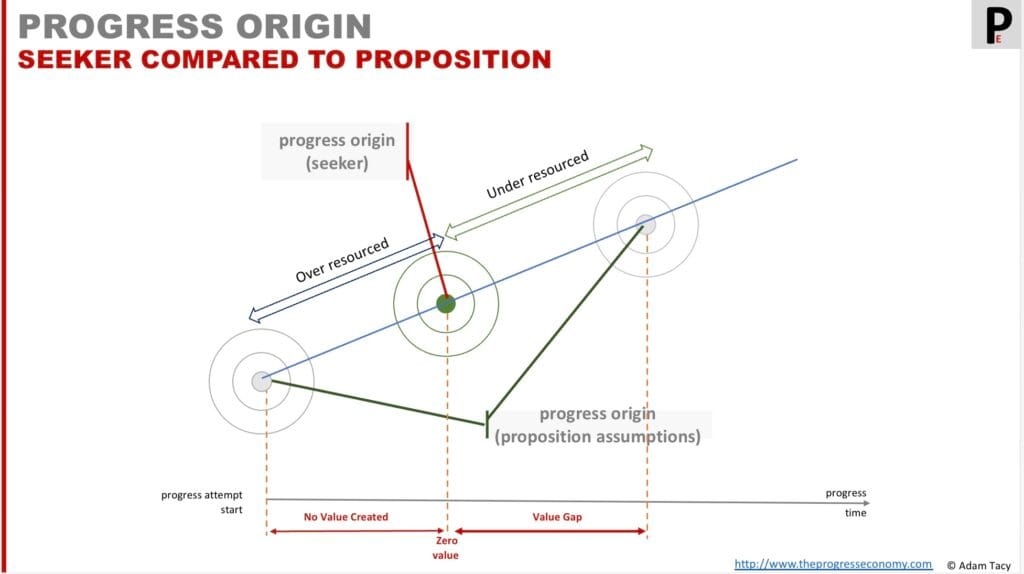
These mismatches are critical to understand. They shape both the Seeker’s decisions to engage, their experience, and the innovation opportunities.
Revealing Innovation
Within the Progress Economy, innovation is understood as improving the ability to make progress.
The Progress Diagram provides a practical way to identify where such improvements can occur. By examining the relationship between progress origins, progress sought, progress offered, progress achieved, and progress hurdles, managers can identify specific intervention points.
These intervention points become progress levers: systematic opportunities to improve how progress is pursued, achieved, recognised, or experienced.
Discovering sales
The same diagram also reveals a different perspective: sales.
From a progress perspective, sales is fundamentally concerned with alignment. It seeks to align the proposition’s assumed origin and progress offered with the Seeker’s actual origin and progress sought. Sales and innovation become closely related activities.

Innovation enables better progress; sales aligns better progress.
Let’s progress together through discussion…